Revolutionizing the Road: The Impact of Virtual Reality in the Automobile Industry

In the rapidly evolving landscape of the automobile industry, virtual reality (VR) has emerged as a transformative force, offering innovative solutions and immersive experiences that redefine the way we design, manufacture, and interact with vehicles. From concept to consumer, here's how VR is reshaping the future of automobiles:
1. Design and Prototyping:
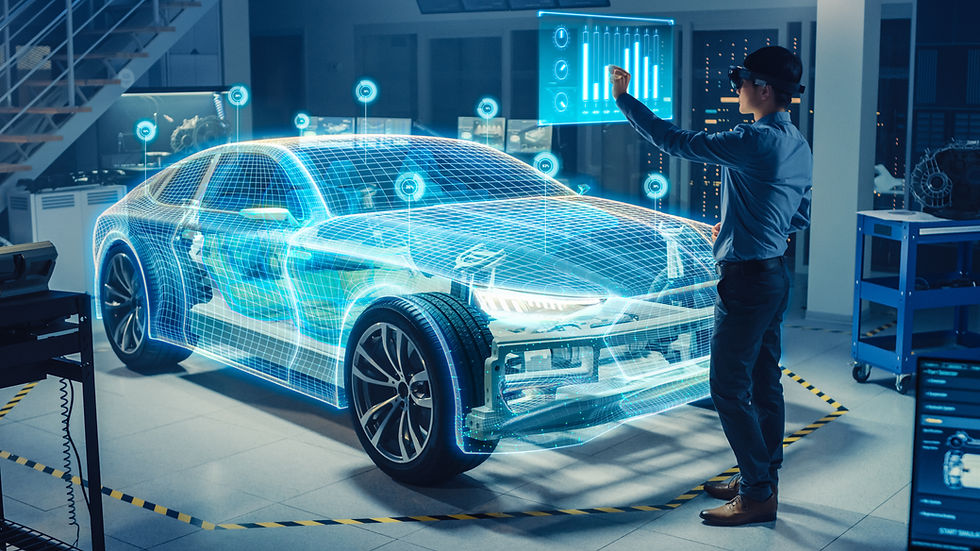
Virtual reality has revolutionized the design process, allowing engineers and designers to step into a virtual world to explore and refine vehicle prototypes. VR enables the creation of detailed 3D models that can be examined from every angle, facilitating more efficient collaboration and faster iteration. This not only accelerates the design phase but also enhances the precision and quality of the final product.
2. Virtual Showrooms and Test Drives:
VR has taken the showroom experience to a whole new level. Car manufacturers and dealerships can now offer virtual showrooms, allowing customers to explore vehicles and customize features in a virtual environment. Virtual test drives provide a realistic feel of the driving experience without leaving the dealership, enabling potential buyers to make more informed decisions.
3. Training and Simulation:
VR is increasingly being utilized for training purposes in the automotive industry. From assembly line workers to service technicians, VR simulations provide hands-on training in a risk-free environment. This not only improves efficiency but also reduces training costs and minimizes the potential for errors in real-world scenarios.
4. Collaborative Product Development:
As global collaboration becomes more common in the automobile industry, VR facilitates real-time collaboration among teams spread across different locations. Designers, engineers, and stakeholders can meet in a virtual space to review designs, share ideas, and make decisions collectively, streamlining the product development process.
5. Customer Experience and Marketing:
Virtual reality is reshaping the way consumers experience and interact with cars. Through VR, potential buyers can take virtual tours of vehicles, experiencing the interiors and features in a highly immersive way. This not only enhances the marketing efforts of car manufacturers but also creates a memorable and engaging experience for customers.
6. Safety Training and Research:
VR is a powerful tool for simulating and studying real-world driving scenarios, contributing to advancements in vehicle safety. Researchers and engineers can use VR to recreate and analyze various driving conditions, helping to develop technologies that improve overall road safety.
7. Augmented Reality in Navigation:
While not strictly VR, augmented reality (AR) is closely related and is making inroads in the automobile industry. AR navigation systems overlay information onto the real-world view, providing drivers with turn-by-turn directions, safety alerts, and points of interest without taking their eyes off the road.
In conclusion, virtual reality is not just a buzzword but a technological leap that is reshaping the automobile industry from the ground up. From design and manufacturing to customer experience and safety, VR is driving innovation and pushing the boundaries of what's possible on the road. As the automotive industry continues to embrace virtual reality, we can expect a future where the driving experience extends far beyond the physical limits of the road.


Comments